Reflective Entry 1 - My Audience
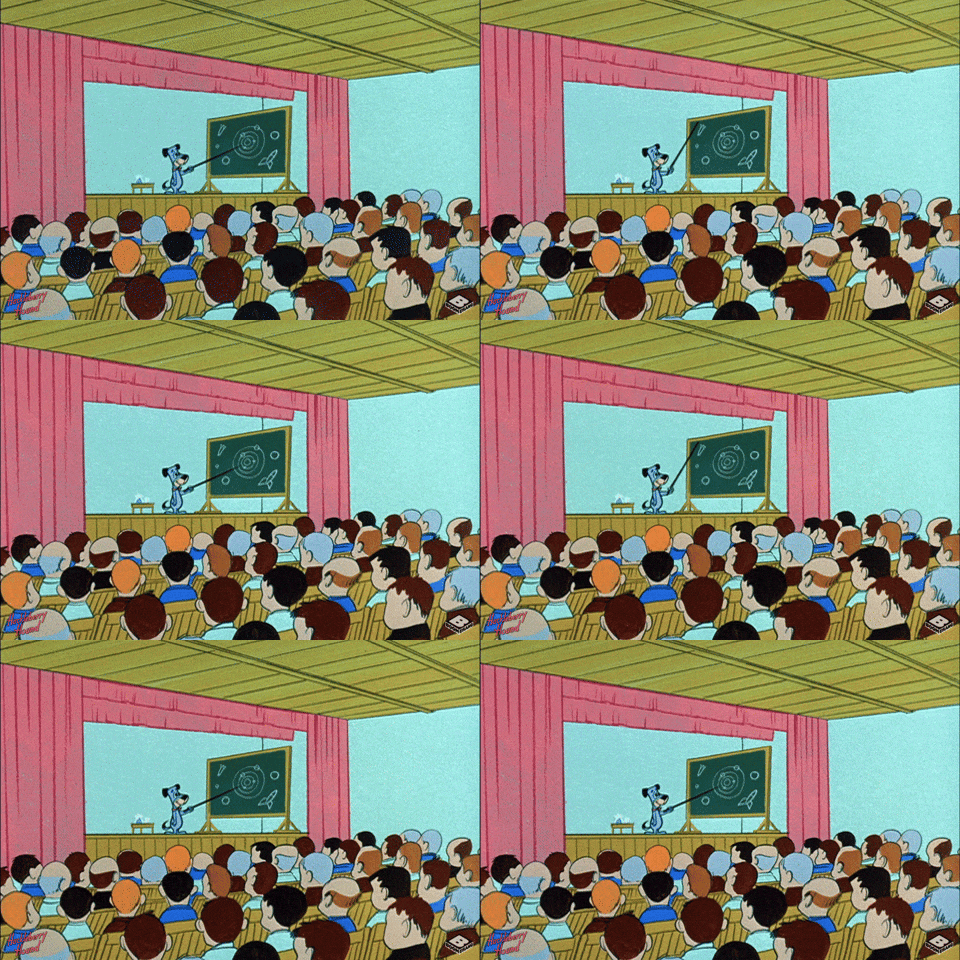
Gail Loane (2010) wrote a book once called "I've Got Something To Say". This is the basis of my inquiry into the choice and control we give to the children in my class that struggle with the traditional ways of 'teaching' writing. All children have something to say - and we need to give them \the chance to say it. I'm not alone in this thinking and what's more, it’s not even my idea. It has been largely driven by recognising the need for children to have agency in their learning. On a national level, Bolstad, Gilbert, McDowall, Bull, Boyd & Hipkins(2010) in their report to the Ministry of Education, recognise 21st Century skills as being crucial to the development of our tamariki and in particular talk of the need to genuinely involve students in their learning.
The two key themes that I am interested in, in this publication are:
Personalised Learning - giving students a voice
The idea of making learning personalised is not new either. Formative assessment over the years has been largely used to give students to learn what they need next, next steps/individual goals, etc. and is embedded in the practice of many teachers. Hattie (2018) also talks about students knowing what they need to know, clear learning pathways and having an idea of the trajectory they are on. No arguments from me - how do you know how to get there if you don’t know where you’re going?
Changing the Script - rethinking teacher and student roles.
The Ministry acknowledges that there is some traction towards this change, it has now become a
case of reflecting on the change and taking it further. The need for partnerships between educators and communities is evident and the notion of students constructing learning through the curriculum is beginning to come to the surface.
So my inquiry attempts to address these issues - with the desired outcome of giving my students a voice. However, this needs to start somewhere, so choice and control are a vital part of the process. Many students at this level and within our context, don’t know they have a voice - they have to find this and know that it is valued. They need to change an embedded mindset that says ‘teachers are the ones that tell us what to learn, how to learn it, and why to learn it’.
The greatest influence on children is their own realities, their families, social circles, and cultural beliefs. Many of the whanau of our young children came from a background years ago where this was the reality - so why should they believe any differently. I once believed that giving students some choice and control in their learning goal was enough. Surely I was doing my bit? However, I have now come to a new understanding of how this may look better in a class of 7 and 8-year-olds.
My inquiry going forward is to explicitly provide choice and control AND help them find their voice.
Much of my inquiry at this level requires a mindset change - both mine and the students directly involved. I do not believe that this will happen overnight, nor that children will suddenly change the world in the immediate future. However, I do believe that if they understand where they are going with their learning AND find their voice, this sets them up to cope with the demands of the
21st Century and the future they are going to find themselves in.
References:
Bolstad, R. & Gilbert, J. with McDowall, S., Bull, A., Boyd, S. & Hipkins, R. (2012). Supporting future-oriented learning & teaching — a New Zealand perspective Report to the Ministry of Education. Downloaded from https://app.themindlab.com/media/109416/view
Loane, G. & Muir, S. (2010). I’ve Got Something To Say: Leading Young Writers to Authorship.
Aries Publishing Ltd. Auckland, New Zealand.


Hi there - blog looks great!
ReplyDelete